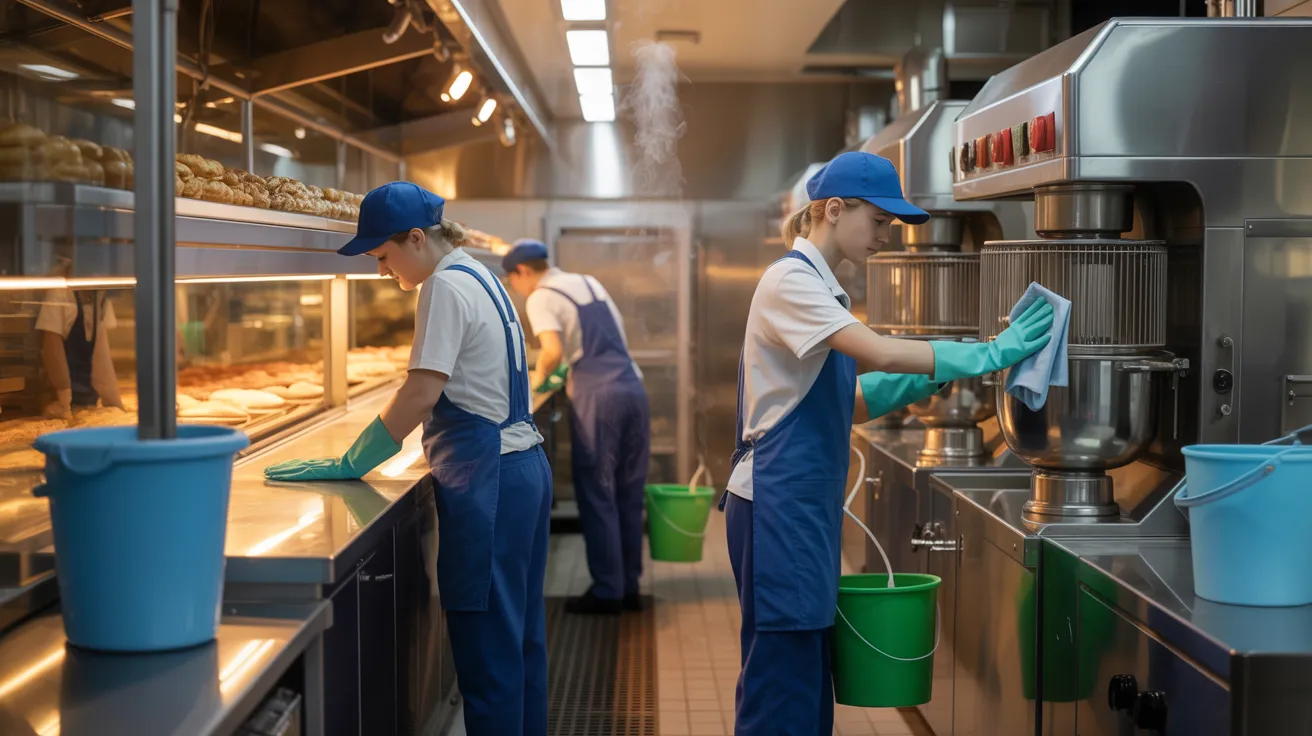
Professional food safety experts located in Brampton ensure restaurants, food distribution facilities, bakeries, warehouses, and mobile food units in compliance. They disinfect high-touch surfaces, food-contact areas, equipment, floors, drains, restrooms, and preparation zones using approved sanitizers, in correct dilution, and with verified times.
Important Highlights
- Sanitation technicians from Brampton support restaurants, grocery departments, commissaries, warehouses, bakeries, schools, mobile vendors, and allergen-sensitive operations.
- Cross-contamination elimination is accomplished by cleaning frequently contacted areas, food-contact equipment, kitchens, floors, drains, restrooms, and storage areas with area-specific procedures.
- Approved sanitizer dilution, compatibility, and contact time are validated by approved specialists, with conclusion documented via samples, reviews, and action records.
- Daily, recurring, and annual operations allocated by section form hygiene schedules based on danger, production rate, transitions, spills, and requirements.
- Suppliers need to possess hazard analysis knowledge, health regulatory knowledge, WHMIS training, liability, credentials, color-coded equipment, and assessment-ready hygiene files.
Which Brampton Venues Need Food Safety Cleaning?
Any Brampton facility that processes, stores, prepares, packages, or distributes food needs food safety cleaning. You must use it if your operation falls under public health inspection, food premises regulations, or internal HACCP-based controls. That requirement covers dining establishments, break rooms, food warehouses, market sections, butcheries, seafood areas, retail shops, and facility kitchens.
Proper sanitation protocols is furthermore required in storage warehouses, production plants, freezer facilities, bakeries, school nutrition services, reception halls, and meal delivery centers. Temporary and mobile businesses are included, examples including mobile kitchens, market vendors, and seasonal booths. Your facility requires written cleaning standards should your employees prepare supplies, portion completed foods, reheat products, or manage allergen records. In Brampton, food safety remains not voluntary; it constitutes lawful, operational, and customer protection adherence.
Which Areas Do Brampton Cleaning Experts Cover?
Your facility requires professional cleaners who sanitize all high-touch areas, cooking and food prep areas, all floor types, and restrooms for food safety and health code adherence. These specific areas are emphasized due to their elevated cross-contamination potential, trip and slip dangers, and violations of hygiene standards.
When you know their cleaning scope, you can verify that your facility's cleaning scope meets compliance and operational standards.
High-Touch Surface Cleaning
arrange disinfection schedules based on foot traffic, environmental hazards, and business activities.
manufacturer standards and health codes is critical. to maintain proper function. Staff can employ swab testing to confirm sanitization success
Kitchens, Floors, and Restrooms
Expect Brampton cleaning experts to target kitchens, floors, and restrooms because each area carries distinct food safety, slip-and-fall, and public health risks. In industrial kitchens, you need grease removal from cooking stations, appliance surfaces, drain systems, preparation areas, and backsplashes to minimize bacterial growth and pest activity.
Floor care that is recorded should equally be anticipated. Technicians scrub and extract buildup from tile grout, ceramic surfaces, and vinyl floors, then apply proper moisture management so you can limit falls and maintain code-compliant conditions. They also address entryways where moisture and debris migrate indoors.
Restroom cleaning requires disinfecting touch areas, bathroom equipment, stall barriers, supply stations, and bins, restocking supplies and controlling odours. They also service restaurant moprooms, where chemical storage, sink hygiene, and drainage conditions can affect sanitation compliance and staff safety daily.
Food Safety Cleaning Significance for Brampton Businesses
Brampton operations demand food-safe cleaning standards to meet health code requirements and pass audits. You also minimize bacterial spread through proper cleaning of food-preparation surfaces, appliances, and frequently-touched items. Most check article importantly, you help protect community wellness by reducing the chance of food poisoning in your establishment.
Regulatory Code Requirements
Food operations in Brampton face stringent health requirements, making food safety cleaning essential to fulfilling health code requirements, defending patrons, and eliminating enforcement action. You must maintain hygienic food handling zones, written maintenance records, proper chemical use, and traceable training practices that comply with municipal and provincial inspection expectations.
Should your cleaning standards deteriorate, you risk violations, compliance orders, reputational harm, and operational suspension during further inspections or enforcement actions.
Cross-Contamination Avoidance
Following health code standards depends on your ability to prevent cross-contamination in routine food work and sanitation. You must separate raw ingredients from ready-to-eat foods, sanitize prep surfaces between tasks, and store chemicals away from food-contact items. Well-defined guidelines decrease contamination chances and support consistent compliance during inspections.
You might establish allergen separation to stop main allergens from reaching shared surfaces, containers, or equipment. Apply separate boards, color-marked equipment, and strict utensil labeling so team members avoid blending products during preparation or service. Mandate handwashing after handling raw meat, seafood, eggs, or allergen-containing products. Change wiping cloths regularly, and test disinfectant concentration using strips. When employees learn these procedures each shift, you create a cleaner, safer operation that matches Brampton's safety requirements every day.
Public Health Safeguarding
Should food safety cleaning break, you don't simply encounter inspection problems—you expand the odds of contamination-related sickness impacting customers, staff, and the wider Brampton community. You also undermine your responsibility in safeguarding community wellness, especially in busy food facilities where pathogens travel quickly through surfaces, equipment, and touchpoints.
You depend on cleaning procedures that remove soils, effectively sanitize, and verify results. This involves maintaining exposure times, utilizing authorized sanitizers, maintaining records, and training employees to fulfill health-unit expectations. These initiatives promote disease prevention by reducing microbes before contaminating food or hands. In Brampton, robust sanitation shields vulnerable populations, curtails outbreak likelihood, and demonstrates accountability. When you adhere to proper protocols, you go beyond regulations—you meaningfully lower danger and advance safer food handling throughout the city.
Why Is Cleaning Essential for Food Safety Compliance?
Thorough cleaning protocols promote food safety compliance by decreasing contamination threats, managing pathogen expansion, and keeping your facility aligned with sanitation requirements under HACCP-based programs and public health regulations. You confirm that contact surfaces remain visibly clean and microbiologically controlled, backing documented preventive controls and inspection readiness.
Conscientious cleaning additionally strengthens allergen management by removing residues that can lead to undeclared allergen exposure. When you match verified sanitation methods with safety training, your staff can implement uniform procedures, employ approved chemicals correctly, update records thoroughly, and respond to discrepancies before escalation occurs. Ongoing cleaning enables traceability, establishes remediation efforts, and demonstrates accountability throughout audits. Additionally, it assists you protect product quality, maintain compliance standards, and minimize the possibility of punitive measures, recalls, formal complaints, and preventable health dangers.
Establishing When to Arrange Commercial Cleaning
cleaning routines or between shifts wherever food-contact areas, washrooms, and high-touch areas
conducting promotions, catering, or public functions
How Do You Choose Brampton Cleaning Experts?
Evaluate providers first by sanitation compliance standards rather than cost. You must ensure each provider understands CFIA, public health, and HACCP-aligned expectations for your business. Request insurance proof, WHMIS compliance, staff training documentation, and supervision methods. Check technician understanding of contamination prevention, chemical safety, and traceable sanitation records.
You should further examine service consistency and accountability. Request testimonials from Brampton food businesses, then review response times, corrective-action procedures, and communication standards. Validate the company supports supplier audits and can supply compliance documentation to authorities or external parties. Confirm equipment receives maintenance, color-coded implements are applied correctly, and site-specific hazards are recognized. A experienced service ensures regulatory compliance, product quality, and your reputation in the market.
What does a cleaning and sanitation plan encompass?
Create a documented strategy that clearly outlines every sanitation task, standard, and responsibility prior to beginning production. You should list cleaning schedules, authorized products, mixing ratios, exposure periods, equipment, and testing procedures for each area, section, and machine. Don't forget to add pre-operational inspections, corrective actions, and employee training requirements.
Your framework should also include cross-contamination controls, waste handling, pest-prevention measures, and documented schedules for restrooms, drains, floors, and food-contact areas. Clarify how you'll separate raw and ready-to-eat processes, help with ingredient tracking, and copyright accurate allergen labeling through validated cleaning between product changes. You should define accountability, maintain signed records, and review results against regulatory standards, HACCP controls, and customer requirements. When gaps appear, adjust procedures immediately and retrain staff.
Commonly Requested Inquiries
Do cleaning services work during nighttime hours at Brampton properties?
If you run regulated facilities, you'll also need records that enable audits and ensure compliance.
Will sanitation professionals respond to emergency spills?
Yes, you can discover many Brampton cleaning professionals providing spill response services. They handle hazardous incidents, assess dangers, contain affected zones, and initiate rapid cleanup to reduce risk and avoid operational impact. You should verify response rates, credentials, PPE measures, and waste procedures. If your facility must meet compliance standards, select a service that tracks incidents, follows procedures, and supports verification.
Are green disinfectants appropriate for surfaces contacting food?
Yes, plant-based sanitizers can be appropriate for food preparation areas if you opt for products labeled food safe and meeting regulatory standards. You should check contact times, dilution ratios, and rinsing needs before implementation. Many botanical formulations reduce chemical hazards, but you should gather evidence of effectiveness against harmful bacteria. To maintain residue free surfaces, you should follow manufacturer directions precisely and validate the cleaning agent meets relevant food safety standards.
Will maintenance plans adapt to seasonal variations?
Yes, you can tailor maintenance plans for seasonal variations. You should adjust intervals, staffing, sanitizers, and verification steps to fit seasonal patterns while upholding compliance standards. You'll reduce operational delays by planning disinfection around production shifts, peak volumes, and operational patterns. You should additionally update standard operating procedures, staff education, and facility monitoring to capture periodic risks, novel allergens, or elevated soil levels. Regular reviews ensure your plan functional.
Do commercial cleaners train employees on hygiene standards?
Indeed, professional cleaners often offer employee coaching on proper hygiene. Your team obtains training on safe chemical application, contact times, cross-contamination prevention, equipment disassembly, and documentation. They typically follow training with HACCP, GMP, and CFIA or local public health criteria. Many perform sanitation audits to confirm standards, reveal issues, and strengthen improvement measures. This supports you in maintain consistent procedures, pass inspections, and decrease foodborne illness risks on a daily basis.
Conclusion
Partnering with Brampton food safety and commercial cleaning professionals goes beyond tidying—it ensures your facility meets inspection standards and your protocols remain compliant. From kitchen areas to production zones, each sanitized surface and organized section lessens contamination risk and avoids costly disruptions. By arranging service on appropriate schedules and executing a comprehensive cleaning strategy, you protect your workforce, clients, and your image. In a heavily regulated sector, clean environments are non-negotiable—they're critical to business success.